

| Summary: This article explores the main challenges nutrition manufacturers face with their ERP systems and what they actually expect from their software. After speaking with more than 80 companies at Vitafoods Barcelona 2026, we analyzed the discussions and identified several recurring needs: consistent traceability across production, storage, and sales locations; instant access to order information when a customer calls; consolidated visibility into inventory, quality, and production schedules across multiple sites; earlier detection of gaps between sales growth and production capacity; and recipes that automatically recalculate when batch sizes or ingredients change. The article also compares specialized manufacturing software with large ERP platforms such as NetSuite, Dynamics 365, and SAP, and explains which requirements Odoo covers out of the box and where configuration or customization may be needed. |
Closing a deal to contract-manufacture a client’s private-label supplement line can take the better part of a year — rounds of sample formulas, packaging approval, certificate reviews, and a price built around one specific ingredient supplier. Most of that history lives in emails and PDFs on one salesperson’s laptop, not in the system that actually runs production.
Then the client’s contact changes, or someone needs to reconfirm a detail before the next order. Nobody at the manufacturer can quickly say which formula version was approved, which supplier the price assumed, or what is actually on file for certificates. In the best-case scenario, the client repeats a conversation that already happened before. In the worst case, production runs the version everyone assumes is current, but it isn’t — that is a quality problem, not just an awkward call.
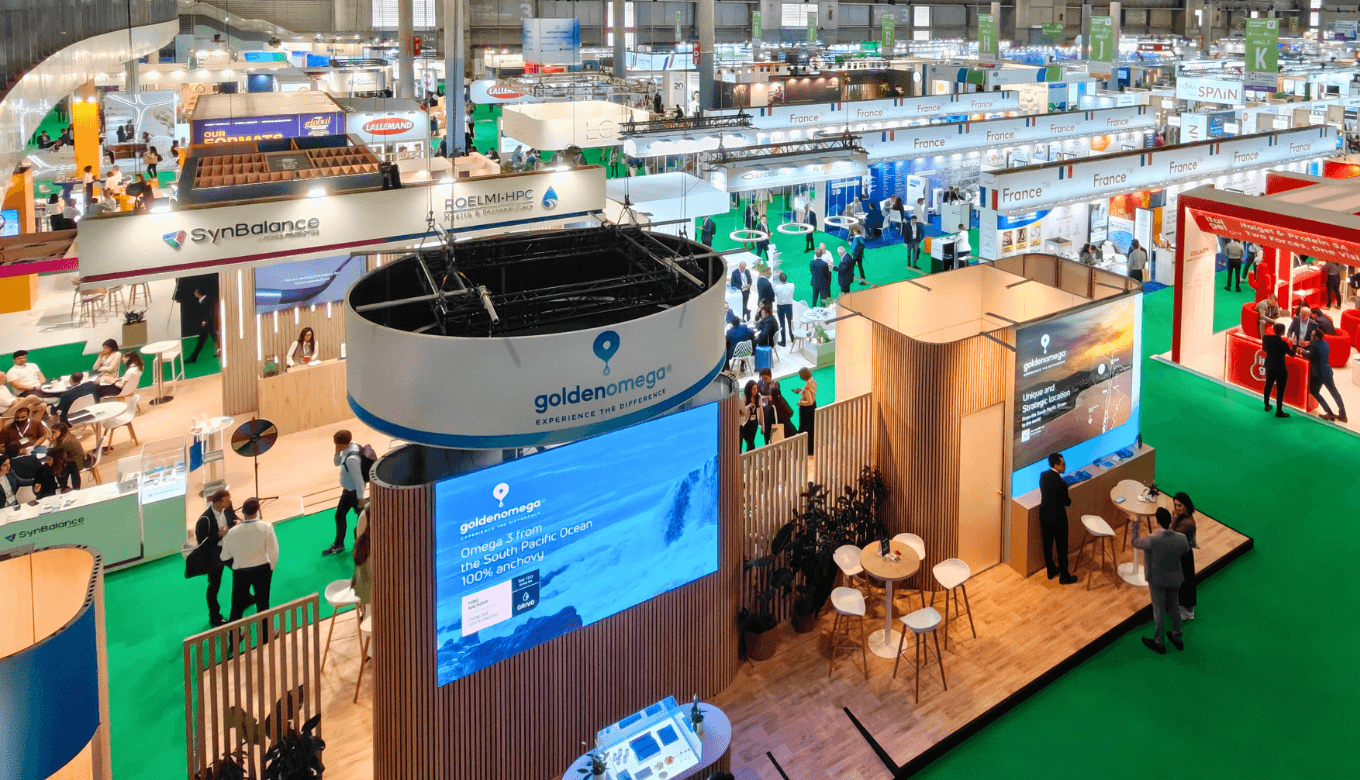
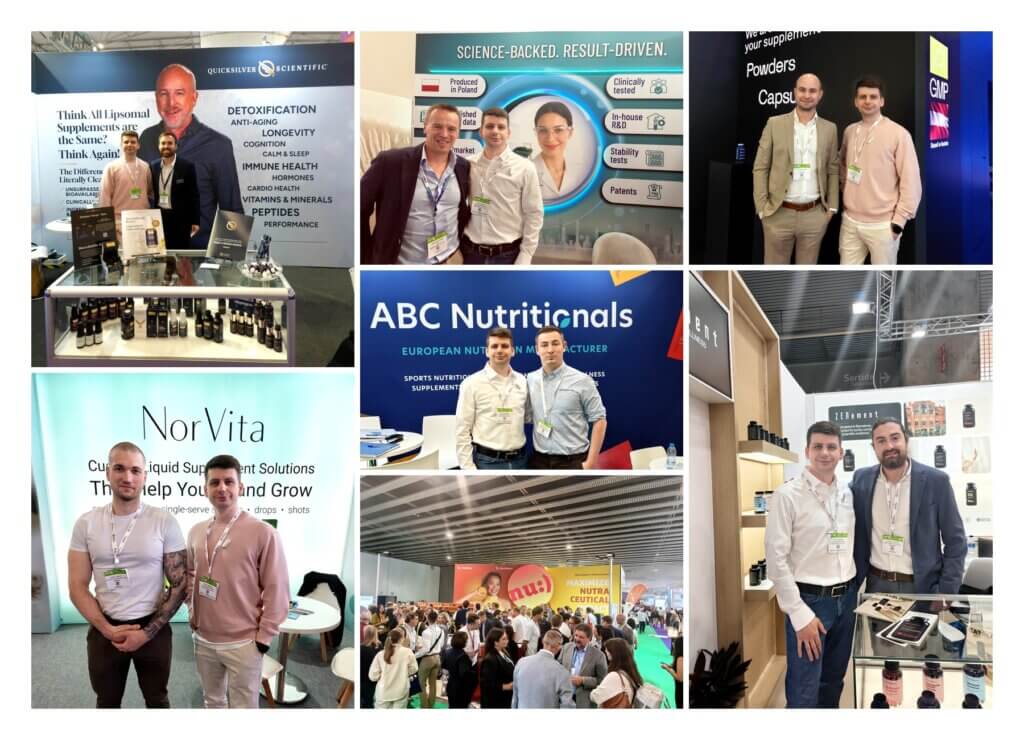
We spent three days talking to nutrition and supplement manufacturers at Vitafoods Barcelona 2026 and had more than 80 conversations. Most of the companies we spoke with were B2B contract manufacturers: They make products for other brands, not for their own storefront. The strongest and most repeated signal in that group was not “Our ERP is bad.” In fact, it was close to the opposite: Each system works acceptably on its own, and everything falls apart at the seams between them — between production sites, and between the people who run the floor and those who talk to customers. Here is what the companies said they want, and how much of it Odoo actually covers.
Bonus: Download the full report from our conversations at Vitafoods Barcelona 2026 👇
What do nutrition manufacturers want from their software?
The clearest descriptions were not feature requests. They were complaints about a seam. Five came up again and again:
“Traceability within one site is usually fine. The moment production, storage, and sale happen in different locations, it turns into a manual exercise.” This becomes a growing risk as contract manufacturers add sites.
“When a customer calls, Sales has no idea what is happening on their order.” The operational side and the customer-facing side behave like two separate companies.
“We run several sites and can’t see one consolidated stock, quality, or schedule across them.” Synchronization happens by phone and by habit, not by system.
“Sales is growing faster than production can scale, and by the time the bottleneck is visible, it already affects lead times.” The physical capacity constraint is real even when the software works, but seeing it coming changes what you can do about it.
“Our recipes don’t recalculate on their own — every batch-size change or supplier swap means doing the math in a spreadsheet first, then re-entering it into the system.” Simple work becomes a bottleneck that is either duplicated or missed entirely.
Underneath all five broken seams is the same request: one shared, current picture of the business; instead, five systems each know part of the story, yet none of them have a grasp of the whole situation.
Why most solutions don’t deliver
Understanding what ERP systems are designed for nutrition companies reveals an awkward gap between two kinds of software, and neither type was built to close this particular seam.
Specialized manufacturing tools – MRP Easy, Katana, and similar systems; they handle formula and batch management reasonably well. They understand BOMs that change by batch size and basic lot tracking. But they weren’t built to run finance, multi-site consolidation, or a sales pipeline, so the customer-facing side and the cross-site view still live somewhere else entirely: on a CRM, a shared inbox, or even on a spreadsheet that one person maintains.
Large ERPs – NetSuite, Dynamics 365, SAP; these go the other direction. They can theoretically run sales, production, and multi-site operations under one roof, but only after customization becomes expensive enough that a mid-size manufacturer can’t justify it. Even when the budget exists, the platform is built for enterprise complexity that a 30–150-person contract manufacturer doesn’t have and doesn’t want to pay for.
The result, in practice: an ERP for production at each site, a separate CRM for sales, a spreadsheet for compliance documents, and no reliable path connecting a sales order to what’s actually happening on the floor across locations. Each piece works fine on its own. The disconnect between the ops side and the customer side — and between sites — is where the actual cost shows up: lost time in reconstructing information, the same order or client data re-entered by hand in two or three systems with more errors creeping in every time, and account history that evaporates the moment someone leaves.
What Odoo covers for supplement manufacturers – and where you still need a partner
Odoo is a genuinely universal tool. Out of the box, it covers a manufacturing business’s core workflow at a basic level: procurement, inventory, production, sales, shipping, accounting, HR; all on one data model. For most growing small and mid-size businesses willing to work within Odoo’s standard workflows, that’s already enough.
Nutrition and wellness brands usually need more than that. No platform covers an industry’s full production and regulatory detail right away. But with an open-source model, a large ecosystem of ready apps and partners, most gaps are either already solved by someone, or they are quick to build. Here’s how that plays out against the pains above:
Sales-to-production visibility. CRM, Sales, and Manufacturing already share one database in standard Odoo, so a rep can see production and quality status without custom development. This usually only needs configuration: deciding which stages are visible to whom, and structuring account history to survive staff turnover.
Multi-site consolidation. Multi-company and multi-warehouse structures are standard Odoo. Getting several sites to behave like one operation, with automated replenishment between warehouses and clear rules for what’s shared versus local, is usually a result of configuration. Where it isn’t, it only needs a small adjustment.
Lot traceability. Odoo Inventory tracks lots natively, which alone is a real step up for anyone coming off a system with no batch tracking at all. Keeping traceability consistent across sites, or handling unusual cases like swapping a lot mid-pick without creating negative stock, only needs light refinement on top.
Production capacity visibility. Odoo’s MPS and Planning modules handle scheduling out of the box. Getting manufacturing orders and their logistics chain to split automatically based on real machine load and capacity takes customization; there are many options for what is possible, given what has been done with other nutrition and supplements projects.
Formula and recipe management. Odoo Manufacturing handles BOMs and batch-size scaling natively. Cascading a change through every product that uses a given ingredient, or triggering an ingredient-ratio adjustment when a lab result flags a batch, takes custom logic on top; but again, such solutions have already been implemented for other similar businesses.
Related Service: Odoo consulting and configurationLocalization follows a similar pattern. Odoo already has ready-made localization packages, often through third party apps, covering standard accounting rules for most countries. What usually needs extra work isn’t the base localization, but adapting it to industry-specific regulatory requirements.
Odoo, like any ERP for supplement manufacturers, won’t match a nutrition manufacturer’s exact workflow right out of the gate. What makes the difference is how much it takes to get there. Odoo is an open platform, backed by a large marketplace of ready apps and a wide pool of implementation partners, and its setup tends to be faster and cheaper than the same work on a closed enterprise system. It’s part of why Odoo for nutrition and supplements work looks different from project to project, even on the same core platform. For manufacturers who also run their own storefront alongside B2B accounts, differences extend to Shopify and WooCommerce connectors for Odoo, as well as other popular marketplaces connectors for Odoo.
The key thing is clear either way: This isn’t something you install and configure yourself. Whether you go with Odoo, NetSuite, SAP, or Dynamics 365, closing these gaps takes an implementation partner. From there, it’s mostly a question of who does the configuration: a local generalist partner, or one with real expertise in your specific business vertical, nutrition or otherwise.
What this looks like in practice
Our public case studies, related to Odoo ERP implementation for the nutrition sector, happen to be consumer and hybrid brands, not pure contract manufacturers — so treat these as evidence of depth in the same underlying modules, not a one-to-one match for every pain above.
LeeGroup GmbH (Switzerland) migrated from Shopify to Odoo and synced roughly 600,000 orders — proof that the same inventory and order-management core holds up at real volume, whether the orders come from a B2B account or a storefront.
Sunday Natural GmbH (Germany) scaled from 500–1,000 orders a day to 7,000–10,000 through Ventor PRO, our warehouse app built for Odoo. This is the kind of volume jump that breaks manual coordination between departments long before it breaks the software, in a contract manufacturing operation just as much as a DTC one.
Genius Nutrition (Romania) needed e-invoicing customized to specific local regulatory requirements — the same kind of country-specific configuration that a multi-site contract manufacturer runs into the moment it operates across borders.
Where to go from here
If you’re reading this, there’s a good chance that you’re involved with one of the wellness or nutrition brands thinking about automating your business or part of its processes: production, warehouse, or sales. Request a consultation and we will walk you through how Odoo ERP for nutrition companies could support your operation.
Bonus: Download the full report from our conversations with nutrition manufacturers at Vitafoods Barcelona 2026 👇
FAQ
Can Odoo consolidate stock and production across several manufacturing sites?
Yes. Multi-company and multi-warehouse structures are standard Odoo functionality, including automated replenishment between warehouses and rules for what data is shared across sites and what stays local. Most of this is configuration rather than development. What usually needs additional work is keeping lot traceability consistent when a batch moves between sites.
Does Odoo handle formula versioning and batch-size scaling?
Odoo Manufacturing scales bill-of-materials quantities by batch size natively and keeps a revision history of BOMs. Automatically cascading an ingredient substitution through every product that uses that ingredient, or adjusting ratios based on a lab result, requires custom logic on top of the standard module.
How long does an Odoo implementation take for a supplement manufacturer?
It depends on the number of production sites, sales channels, and localizations involved, and on how much of the existing workflow fits Odoo’s standard processes. A discovery phase is what turns those variables into a firm scope and budget before the main project starts.
Contact us to find out the estimated timeline for your case.
What ERP systems are designed for nutrition companies?
Two categories compete for this market. Specialized process-manufacturing systems such as MRPeasy, Katana, BatchMaster, and Mar-Kov are built around formula and batch management, but they do not run finance, multi-site consolidation, or a sales pipeline on their own. Large ERPs such as NetSuite, Dynamics 365, and SAP cover all of that but usually require customization, which a mid-size manufacturer struggles to justify. Odoo sits between the two: one data model covering production, inventory, sales, and accounting, with industry-specific requirements added through configuration and custom modules.
Can Odoo sync orders from Shopify and WooCommerce into one inventory?
Yes, through connectors. Nutrition brands that sell both B2B and through their own storefront usually need orders, stock levels, and product data synchronized in both directions rather than imported once. Our Shopify connector moved more than 600,000 orders into Odoo for LeeGroup GmbH, a Swiss supplement producer.
Recommended articles:
- Odoo ERP for a Growing Nutrition and Supplements (Nutraceuticals) SMBs
- Why Odoo Works for Thousands but Failed for You? The Hidden Truth Behind Odoo Complaints
- How to Calculate Odoo Workers for Demanding Systems
- Odoo Implementation Steps
- Odoo Access Rights Structure
- AI Order Processing in Odoo
- Odoo EDI Integration
- Key Performance Indicators (KPIs) and their Role in Successful ERP Implementation
- 10 most common questions to the official Odoo partner

- 3+ years of experience in product manager and product owner roles
- 6+ years of experience in sales and offline and online marketing
- 5+ years of experience in web and mobile project management
- 4+ years of experience in B2B marketing (IT companies, ERP systems)
- 5+ years of experience in warehouse management and logistics
- Main project roles: Marketing Manager, Project Manager, Product Owner, Consultant
- Primary objectives: Increase sales and brand awareness; implement marketing strategy; achieve objectives and goals.
----------------------------------------------------------------------
Education: Bachelor's degree.
----------------------------------------------------------------------
Experience:
Project Manager
Bookshop
Marketing Manager, Chief Sales and Marketing Officer
XPANSA Group
----------------------------------------------------------------------
Current position: Co-founder & CBDO
VentorTech
----------------------------------------------------------------------
Licenses & certifications:
IT Product Management (Basic Level)
IT Product Management (Professional Level)
My Monday

- 7+ years of experience in online and offline marketing
- 4+ years of experience in B2B marketing (IT companies, ERP/CRM systems)
- Main project roles: Marketing Manager, Customer Support, Sales Manager
- Increasing brand awareness. Implementing marketing strategy.
----------------------------------------------------------------------
Education: Bachelor's degree.
----------------------------------------------------------------------
Experience:
Marketing Manager
XPANSA Group
Marketing Director
sci.AI startup
Business Development Manager
Cardinal 9
Technical support and marketing
Tavrida Electric
----------------------------------------------------------------------
Current position: Head of Marketing VentorTech
----------------------------------------------------------------------
Licenses & certifications:
Product Analyst.
OTUS.
Google AdWords - search advertising.
Google.
Inbound Marketing
HubSpot.


0 Comments